

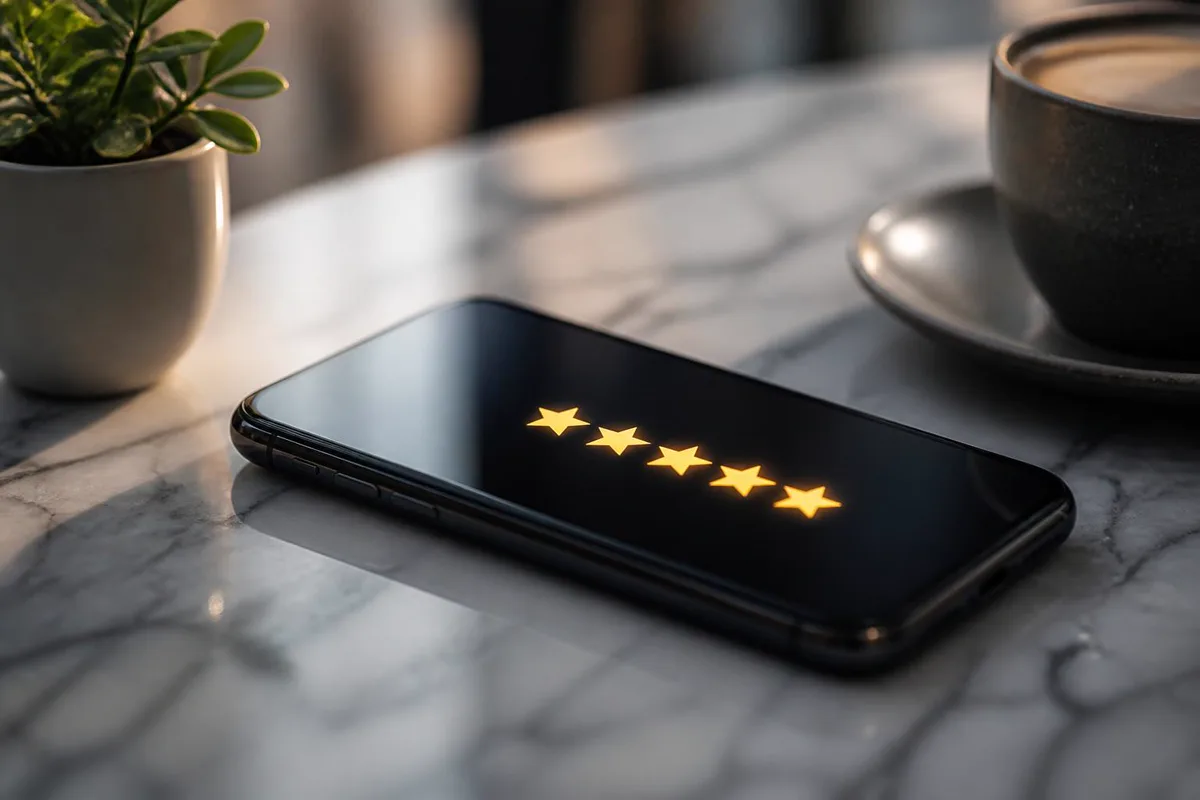
Reviews are the second-most-viewed element on any practice's Google Business Profile after the name itself. Getting review generation right is the highest-leverage marketing activity most practices ignore, and it is one of only a handful of activities that both improves local SEO and improves patient trust in the same motion.
The problem is that most practices treat review generation as a one-off — a card on the counter, a QR code that a receptionist mumbles about at checkout, a monthly plea from the practice manager at the team meeting. None of it compounds because none of it is a system. What follows is a three-touch flywheel that turned one practice's 3.9 average into 4.8 over six months, without any paid review software.
01. The three-touch flywheel
The core idea is simple: separate the private feedback loop from the public review loop. Ask everyone privately first. Only route the happy ones to Google. Route the unhappy ones to a resolution form that lands in the practice manager's inbox before it lands on the internet.
- Touch 1: Post-visit SMS at the 4-hour mark asking for a private rating (1–5)
- Touch 2: If rating is 4–5 stars, auto-invite to Google with a one-tap link. If 1–3, route to a private resolution form
- Touch 3: Weekly staff huddle reviewing the last 20 responses and closing feedback loops
02. Why the private rating step matters
The private rating step is the entire game. Without it you are gambling that every patient who was asked to review had a five-star experience — and they didn't. Every practice has bad days, missed follow-ups, and grumpy visits that had nothing to do with clinical quality. Sending every patient straight to Google amplifies that noise into your rating.
The private step also gives you an early-warning system for operational issues. When three patients in one week rate you 3 stars and mention wait times in the free-text field, you have a signal your practice manager can act on this quarter, not next year when the Yelp average has already slipped.
03. Timing and tone of the SMS
Send the request 4 hours post-visit — long enough for the patient to be home and settled, short enough that the visit is still fresh. Keep the message conversational: 'Hi Jane, this is Dr. Ruiz. Two seconds — how did today go? Reply 1 (rough) to 5 (great).' No branded template, no logos, no pixel-perfect email. The response rate on a short conversational SMS is 4–6x the response rate on a designed email.
04. The weekly huddle
The final piece is the huddle. Every Monday morning the manager reviews the last 20 responses aloud with the front desk and lead clinical staff. Positive themes get named. Negative themes get owned. Any 1–3 star response gets a documented follow-up plan by the end of that huddle, and the follow-up is tracked to close.
This is where the flywheel becomes cultural. Once the team sees their names in praise every Monday and sees issues resolved instead of buried, they stop viewing reviews as a marketing problem and start viewing them as a mirror of the work they did last week. That shift is the thing that moves a 3.9 to a 4.8 — not the software, not the QR code, not the card on the counter.